Dedications: My four late friends Rory, Stan, Bryan, Jeff - shine on you crazy diamonds, they would have blogged too. Then theres Garry from Brisbane, Franco in Milan, Mike now in S.F. / my '60s-'80s gang: Ned & Joseph in Ireland; in England: Frank, Des, Guy, Clive, Joe & Joe, Ian, Ivan, Nick, David, Les, Stewart, the 3 Michaels / Catriona, Sally, Monica, Jean, Ella, Anne, Candie / and now: Daryl in N.Y., Jerry, John, Colin, Martin and Donal.

Thursday, 13 February 2014

'60s David Warner double bill

Of all the new actors to emerge in England in the '60s, the most unusual must surely have been David Warner, tall and gangly and with that odd face, he was as individual as posh boy James Fox, among those working class new boys Albert Finney, Alan Bates, Tom Courtenay, Terence Stamp, David Hemmings, Michael York or the very individual Peter O'Toole. Warner was a sensational HAMLET in the early '60s (wish I had seen him, he would have been a choice addition to those other Hamlets I have seen: Peter McEnery, Michael York, Alan Bates, Jonathan Pryce, Stephen Dillane, David Tennant's understudy).
David was soon in films with his amusing creep Blifil in TOM JONES in '63 and then came his star-making role in MORGAN in 1966, which also launched Vanessa Redgrave, the same year as her mystery woman in BLOW-UP (below). They were also together in Lumet's film of Chekhov's THE SEA GULL in 1968 - as per recent review below.
MORGAN is a black comedy by Karel Reisz, it and GEORGY GIRL were the two must-see British films that summer. Morgan Delt is a failed and irresponsible left-wing artist whose Communist parents own a fish and chips shop in downmarket London. He is also an aggressive and self-admitted dreamer, a fantasist who uses his flights of fancy as refuge from external reality, where his unconventional behavior lands him in a divorce from his wife, Leonie, trouble with the police and, ultimately, incarceration in a lunatic asylum. Morgan also is obsessed about animals, gorillas in particular, even dressing up in a gorilla suit to wreck his wife's new marriage reception, a wildly funny sequence, and we also gets extracts from Tarzan films and the original KING KONG. Written by David Mercer and with a John Dankworth score, it presses all the right buttons. 

Vanessa is radiant again as Leonie, that posh girl with that fabulour house (she was nominated as Best Actress at the Oscars, as was her sister Lynn for GEORGIE GIRL, a first since the DeHavilland/Fontaine sisters). Robert Stephens is her oily boyfriend (as uctious as he was in A TASTE OF HONEY), and Irene Handl is of course perfection as Morgan's defiantly working-class mother. Morgan and his zany antics could get rather trying, but the film mixed all the elements perfectly, as we leave Morgan tending his flower patch at the hospital, with its hammer and sickle flower pattern, as a very pregnant Leonie laughs. Somehow it captures that perfect mid-60s moment perfectly, like the scene with Leonie and new boyfriend in the car - careful with that scarf, Vanessa - this isn't ISADORA ! 

Warner went on to lots more films and in fact, despite a hiatus in the '70s, has hardly stopped working and is still going now. IMDB lists over 200 credits as he has been in everything from TITANIC (two Titanics actually, also a tv movie) to episodes of MURDER SHE WROTE and TWIN PEAKS. Sam Peckinpah used him several times, in CABLE HOGUE, STRAW DOGS, CROSS OF IRON. Other films of the time included THE BOFORS GUN, WORK IS A FOUR LETTER WORD, THE FIXER. I saw him on stage in a production of I CLAUDIUS as the stammering lead, in the '70s. Then there was THE OMEN, Resnais's PROVIDENCE in '77, an AIRPORT movie - the CONCORDE one, Losey's A DOLL'S HOUSE, and his Edward II meeting that grisly end on stage in THE DEADLY AFFAIR ... We particularly liked his chilling Jack The Ripper in another '70s favourite, TIME AFTER TIME, where he and Malcolm McDowell are perfectly pitched together, this is due for a re-look and review sometime soon now. David is certainly one of the "People We Like".
Another oddity of his, never seen now, is the 1968 German film MICHAEL KOHLHAAS by Volker Schlondorff (we reviewed his SWANN IN LOVE from 1984 a while back), which is oddly fascinating.
It's medieval times. Michael Kohlhaas is a horse dealer. When going to the local fair to sell his horses, he is forced by a nobleman to leave him part of the merchandise as payment for traveling through his land, promising to give the horses back when the fair is over. When he returns, the horses are almost dead, and the man refuse to respond, so Kohlhass begins to fight unsuccesfuly against the injustice. He becomes a folk hero but cannot defeat the system. It ends with him broken on a wheel, even though he has won,and dying in agony as he sees his horses running free in the distance. 
Life in 16th century Europe was short and brutal and brutalising it seems, and here is more proof. Schlondorff though piles on the agony and the brutality, as even our hero's wife - Anna Karina - is trampled to death. Others are trapped in burning buildings and meet all kinds of nasty ends, as Kohlhaas wages war on tax collectors and judges. The unrelenting detail gets rather too much. It all looks perfectly in period though as it shows how a man can be consumed by revenge - is Michael Kohlhaas a tragic hero or simply a fool who cannot adopt and survive?   
Mads Mikkelsen has also played Kohlhaas in a recent 2013 production. 
Next: Terry and Julie - but not together ...

Wednesday, 12 February 2014

Sixties night: Bailey & Blow-Up

Our enterprising Sky Arts 1 channel ran a Sixties themed night last night, starting with some pop promos of the early sixties, followed by The Stones in The Park documentary from 1969, and a guided tour of that new David Bailey STARDUST exhibition at the National Portrait Gallery (see post below), where Bailey gave us and Tim Marlow a tour of the exhibition, as we examined various photographs, there are 250 in all. He talks about the ideas behind some of his most famous subjects (Salvador Dali, Kate Moss, David Bowie) and his early days as a photographer's assistant. There were contributions too from those who know Bailey best, among them Peter Blake, Tom Ford and Jerry Hall. This was fascinating in itself, but maybe now makes one feel one has seen the exhibition ...
This was followed by a screening of Antonioni's 1966 classic BLOW-UP, discusssed here many timed before, as per labels. Even though I don't know how many times I have seen it I simply have to sit there and let it all unfold again. I still love the first parts, with that park, and the central meeting with Hemmings and Vanessa Redgrave as the mystery woman (thogh no-one in the film has names, they are usually referred to as Hemmings is Thomas, she is Jane, and Sarah Miles is Patricia), and the long sequence of blowing up the prints. I like the scenes with him driving around the developing city in his car too, with the painted streets and the greener than green park specially painted in Woolwich, and that elliptical dialogue with the girl in the antique shop, but then all the dialogue is elliptical.

Looking at it again now this is where it falls apart for me. A woman luring a man to a spot in a quiet London park where someone is hiding in the bushes with a gun to shoot him?, then the body being left there overnight - which our photographer sees when he visits, though it is gone the next morning .... how does she know who the photographer is and where he lives - as she turns up just at he arrives back at his studio - this was the pre-internet world when people did not have information at their fingertips (that two way radio system he has in his car is soooo antiquated now!), plus when they come back and raid his studio while he is out they take all the prints so they know he has discovered their plot. 
Then the sequence in the club where the zombie-like audience watch cult band The Yardbirds make out like The Who as Jeff Beck wrecks his guitar, its all cringe-making, as is that druggy party Thomas moves on to, in search of his agent who is out of it, as of course is model Verushka (who is in Paris), as we have Thomas waking up alone in that house. 
It is another Antonioni bleak dawn (as in L'AVVENTURA and LA NOTTE) as he goes back to the park and those annoying students arrive for that game of tennis .... so one can pick lots of holes in the narrative, but once those leaves start rustling in the park it all does not matter, its the mood it creates (as in the recent Woody Allen BLUE JASMINE, the plot there is full of holes too). Thomas's studio where he entertains Jane is still a very cool space, and those scenes around Chelsea and Kings Road and that restaurant are so nostalgic, as I lived there (18 Draycott Place) in the early '70s.
I still love BLOW-UP with a passion, it was the key movie of my early 20s when we all looked like David Hemmings up there on the screen. He looks like a decadent cherub sometimes but the pain and anguish is clear on his face at the end, before he literally vanishes from our sight, and that soundtrack by Herbie Hancock still resonates for me too. Of course the film has nothing to do with David Bailey as it was written and scripted from an entirely different source (even Terence Stamp is on record as thinking it was about him). But it was the film to see in 1967, when it opened in Europe. It was at the 1967 Cannes Film Festival, and according to my "Films & Filming" magazines, it went on general release to local cinemas on May 14, in a double bill with something called DOCTOR YOU'VE GOT TO BE KIDDING, a Sandra Dee vehicle no less ! 
 Amusing too to see the advert for the general release about that time of an dubbed into English version of the hit A MAN AND A WOMAN, in a double bill with Tony Richardson's little seen THE SAILOR FROM GIBRALTAR. How did I miss that double bill ! I never got to see the Richardson until recently but loved the French version of UN HOMME ET UNE FEMME ... strange indeed were the release patterns of movies back in the Swinging Decade! That would have been an arty evening for suburban sophisticates at their local Odeon, let alone the latest Antonioni at their ABC !

Sunday, 9 February 2014

Sunday musings: cities, exhibitions, playlists ...

Reading the Sunday papers it looks like Brazil and South America generally is this year's hot destination. Not only the World Cup coming up but the next Olympics in 2016 in Rio ... soon those magical names like Leblon, Bahia, Belem, Recife, Salvador, will be as common to us as Rio, Ipanema, Sao Paulo and the others .... 

 
South America fascinated me as a schoolboy as I liked geography - 
I have a vivid memory of being in class and fascinated by those cities like Valparaiso and Montevideo, and countries like Uruguay where Punta Del Este is a hot destination now, then there is Lima with its catherdrals and colonial history. Valparaiso (below) looks marvellously colourful with those new apartment blocks in every shade, while the old colonial buildings of Salvador, above, look stunning too.  I think I will have to sit back and re-run Belmondo running around Brazil in THAT MAN FROM RIO (1964) or 1959's BLACK ORPHEUS with a caipirinha or three ... if I can't get to Brazil right now, as our rains and floods continue, I can at least get a bottle of cachaca and some limes and sugar ...
Meanwhile, back in cold, wet London at least some interesting exhibitions are opening:
I have had this French poster since 1974
The new David Hockney exhibition: HOCKNEY' PRINTMAKER at the Dulwich Gallery is attracting rave notices, covering as it does the artist's remarkable printmaking career. ~The cheeky chappy from Bradford who lit up the Sixties is now a grumpy old man, quite deaf and still smoking at 76 - as per report below, and that recent interview with him back in LA. (Hockney label). Covered in this latest exhibition of 150 works are his prints from those early Cavafy drawings, Picasso etchings, that Seventies Paris period (with that favourite of mine "Two Vases in the Lourve" above), and portraits of his friends like Celia Birtwell, posed in a vintage blouse. Examples of Hockney's more recent print experiments, with photocopiers and inkjet printers, also feature. One to see then. At the Dulwich Gallery until May.
Hockney, Printmaker features over 150 works, from etchings executed at the Royal College of Art in the 1960s, to experiments with printed computer drawings some fifty years later, via portraits, pools, poetry, Xeroxes and investigations into multi-point perspective. Written by Richard Lloyd, head of prints at Christies, with contributions from Hockney's friends and associates, it explores the many achievements of Britain's greatest living practitioner of the graphic arts. - See more at: http://www.accdistribution.com/uk/store/pv/9781857598933/hockney/richard-lloyd#sthash.bvwhG4R2.dpuf

Another Sixties Enfant Terrible is also being honoured at the National Portrait Gallery: David Bailey and the STARDUST exhibition of his photos. I remember Bailey's 1965 BOX OF PIN-UPS with those loose limited edition prints of his very individual portraits (all that black and white) of the biggest celebrities of the day, including Terence Stamp, The Kray Twins, Mick Jagger in that fur-lined anorak, Michael Caine, Jean Shripton, Julie Christie, Nureyev and all the others ... whatever happened to mine? it would fetch a fortune now.  
Bailey has continued throughout the decades, along with Terence Donovan and Brian Duffy who documented the Swinging Sixties. This new exhibition has some old favourites as well as new surprises as Bailey covers his many trips to remote places, like the Ethiopian famine in 1984, and Aboriginal Australia, as well as more recent forays to Hackney and Harlem shooting in clubs and theatres. At 75 David Bailey is still going strong too. As he says "It takes a lot of looking before you see the extraordindary". BAILEY'S STARDUST is at the National Portrait Gallery to June 1. I shall be going along before too long.

More photos: Photographer Cornel Lucas was a pioneer of film portraiture, shooting both British and American stars. He specialised in carefully composed and lit images, and in 1998 he became the first stills photographer to be awarded a Bafta. Photo Noir: The art Of Cornel Lucas is a new exhibition of his work at the National Theatre Lyttelton exhibition space which runs from 17 February to 29 March.
We have covered Lucas's output here before, see his RIP at label. He died  aged 92 in 2012, his first wife was that glamorous siren Belinda Lee, but they divorced in 1959, two years before she was killed in a car crash, aged 25 ... Like Bob Willoughby and Eve Arnold  and Jack Cardiff he is one of the great photographers - lots on those at labels.

Finally, playlists! It also seems the humble playlist is having a moment. Back in the '80s we made mixtapes on cassettees, for friends or those we fancied. Playlists - liked, shared, and tweeted, have now it seems become a prime promotional tool. It is a great way to discover new music, by checking the playlists of people whose taste you trust. Now of course, there are millions of songs to choose from, as music gets more and more accessible online. 
Back in the CD heyday I liked those BACK TO MINE two-disk compilations where artists like The Pet Shop Boys or Groove Armada isssued their favourite tracks. Where else could you hear Dusty Springfiend next to Etienne Daho or Italian disco ("Passion" by The Flirts). "The Sunday Times" ran a big feature featuring Playlists including by Rod Stewart (his favourite soul tracks - I have them all), and those of various journalists and celebs. 

Here's my today playlist - tomorrow's would be completely different  ...
David Bowie - Win
Massive Attack - Unfinished Sympathy
Marvin Gaye - Distant Lover
Joan Armading - Mameo Beach
Nina Simone - Seeline Woman
Donny Hathaway - A Song For You
Miles Davies - In A Silent Way
Neil Young - Old Man
Joni Mitchell - Car On A Hill
Aretha Franklin - Ain't No Way
A Man Called Adam - Barefoot In The Head
Madonna - Nothing Really Matters
Billie Holiday - Fine and Mellow
Etta James - I'd Rather Go Blind
Billie Ray Martin - Deadline For My Memories
Muddy Waters - Mannish Boy
Howling Wolf - Sitting On Top of the World
Cream - Spoonful
Nile Rogers/Daft Punk - Get Lucky.

1970 rarity: First Love

As IMDb puts it:
Based on Ivan Turgeyev's novella, FIRST LOVE is about two young lovers in czarist Russia. One is a 21-year-old woman, the other a young man of sixteen. Things take a tragic turn as the girl (Dominique Sanda as Sanaida) falls in love with the boy's father (Maximilian Schell). The film, Schell's first as director, was nominated for Best Foreign Language Film in 1970's Academy Awards

Two icons of '70's international cinema -- Dominique Sanda and  John Moulder-Brown -- play wonderfully off each other in this lovingly rendered tale of youth, love and the loss of innocence. 
The photography by none other the great Sven Nykvist so of course it all looks terrific, shot in Hungary, with that right kind of period look.  Schell assembes an interesting polyglot cast, apart from the two young leads and himself, theres Italy's Valentina Cortese and English character actress Dandy Nichols, playing posher than usual here, plus Richard Warwick from IF... and BUMBO, as well as playwright John Osborne (Schell had performed in his A PATRIOT FOR ME in 1969. Like Lumet's THE SEA GULL (below) it too plays out at a languid pace as we experience those lazy days on the country estate, which, with the house, look marvellous to our eyes now.
Anjelica Huston in a magazine feature on her favourite books, has this to say about FIRST LOVE: "A hauntingly beautiful novella that Turgenev partly based on his own experience. In it, two men describe their first passions, inspiring the third, Vladimir, to quietly write his story down".

FIRST LOVE - I saw it at a sole London Film Festival screening back then - has not been available for years, so its good to see it back in circulation now. It too has that early 70s look, when international and youth culture movies were all the rage.
 Moulder-Brown was also effective that year in Skolimovski's DEEP END, a favourite here, and 1972's KING QUEEN KNAVE (Moulder-Brown label), as well as appearing in Visconti's LUDWIG in '72 as well as VAMPIRE CIRCUS!. He still looks great now, as per the extras on the DEEP END Blu-ray, but does not seem to do much, though IMDb lists 66 credits with him working until recently, like James Fox he was a child actor.
John Osborne, left; Dominique Sanda, centre; Richard Warwick, right.

Sanda, was for a period, the face of the new European cinema, with so many fascinating roles in such a short time: Bresson's A GENTLE CREATURE, FIRST LOVE, memorable as Anna Quadri in  Bertolucci's THE CONFORMIST - that chilling murder in the woods, and that sensual tango - in 1970, as well as Micol in De Sica's THE GARDEN OF THE FINZI-CONTINI'S, (see Sanda, De Sica labels) and in Bertolucci's 1900 in '76, as well as Demy's UN CHAMBRE EN VILLE (A ROOM IN TOWN) in 1982, and is still working now. She has been luckier than that other lauded discovery, the late Maria Schneider (RIP label).
Schell died last week, aged 83, as per RIP below.

Friday, 7 February 2014

'60s rarities continue: The Sea Gull

Finally, the 1968 film of Chekhov's THE SEA GULL is available (a no-frills Warner Archive all region release). This has been one of my holy grails - as it never appeared anywhere here in the last 40 years or so. Hard to fathom why, as its a Sidney Lumet film with a stunning cast of the time. James Mason, Simone Signoret, Harry Andrews and David Warner (briefly) had all appeared in his 1967 London thriller THE DEADLY AFFAIR, and here they are again for this film of the Chekhov play.

Love yearned for and love cast aisde. The powerful, all-star film version of Chehov's classic. A brilliant cast brings playwright Anton Chekov's masterpiece of the capricious power of passion to the screen. The story is set during two gatherings, two years apart, on the same Russian country estate and among six lovers, most of whom are not loved in return. Those who are hard-shelled and wordly shrug off romantic disappointment. Those who are not, cannot ... and tragedy ensues. With direction by Sidney Lumet (NETWORK, DOG DAY AFTERNOON, THE VERDICT) and the talents of James Mason, Vanessa Redgrave, Simone Signoret, David Warner, Denholm Elliot and more lights of film and stage, THE SEA GULL resonates with profound emotion.

That's the dvd blurb. I am not familar with this play, but know Chekhov's THE THREE SISTERS (Theatre label) very well, from various productions (Janet Suzman and Joan Plowright were ideal Mashas, but the best one and still vivid in my memory is a 1968 production at London's Royal Court with Glenda Jackson ideal, and the young Marianne Faithfull a radiant Irina). Also, having last seen Vanessa Redgrave as the dying wife of Terence Stamp in last year's SONG FOR MARION (review below) another of those tedious movies for the older generation, it is marvellous to go back and see her in her '60s prime here.

First of it, it looks lovely (as staged by Tony Walton, and photographed in Sweden by Gerry Fisher), set in that countryside by the lake, with the woods and the trees and that country house estate where they gather to watch the play, which the bored mother, actress Arkadina, soon interrupts. Konstantin the son (David Warner) is distraught, he loves Nina who was playing on stage, but she gets to meet Trigorin (James Mason) the companion of Arkadina (we earlier see him sleeping naked in bed, while she sits at her dressing table). Arkadina is visiting the estate of her brother Sorin (Harry Andrews), and also to hand is Alfred Lynch (WEST 11- London label) as the schoolteacher who is in love with Masha (Kathleen Widdoes, from Lumet's THE GROUP) - the one who wears black as she is in mourning for her life - daughter of the estate bailiff Ronald Radd. Eileen Herlie is the bailiff's wife, and also to hand is Denholm Elliot, a doctor, sporting an odd wig. We spend the first act watching them gather and interact as Konstantin stages the play. Vanessa's Nina is spellbinding and luminescent here, and Warner suitably intense. The last absorbing if melancholy act takes place two years later ...

Lumet had already done the highly-regarded 1962 film of O'Neill's LONG DAY'S JOURNEY INTO NIGHT, among other successes, but somehow comes a cropper here, as it all gets tedious, there are long speeches shot with few close-ups, with some odd casting choices, the chief one being that Simone Signoret with her Franch accent seems all wrong here, playing with her English brother and son. Pauline Kael's long review came to hand in her book "Going Steady" so let's quote a bit: she calls it a badly-filmed play as characters playing educated middle class and professional people - mixed with bohemians - mingle just before the turn of the 20th century. They are beset by financial problems (the schoolteacher does not earn enough), unrequited love, unrealised aspirations, they indulge in unhappiness and nostalgia and despair. Signoret's accent gives her lines the wrong shadings and emphases. Because her style isn't in tune with the others and because her lines sound heavy, Arkadina loses her charm and becomes the villainess of the piece - a selfish, stingy, son-devouring Freudian mother. And every time this monster speaks she stomps on the remnants of the fragile play. But its interesting to see actors wrestling with real roles, even when the actors are wrong for them. Simone Signoret is bad here, but she is still Simone Signoret. And THE SEA GULL is a terrible movie, but it is still a movie of THE SEA GULL". (Signoret though was terrific in SHIP OF FOOLS, GAMES, THE DEADLY AFFAIR, ARMY OF SHADOWS in those years).
Well that certainly gives one food for thought when watching Lumet's film, at least it is in circulation again. (Kael is also very pertinent on another Lumet filmed play, Arthur Miller's A VIEW FROM THE BRIDGE from 1961, which I may get around to soon too). Maybe time soon for Chekhov's other drama of loss and regret UNCLE VANYA ...

Next: Another rarity, Maximilian Schell's 1970 film of Turgenev's FIRST LOVE (more Russian costume drama angst), plus Warner & Redgrave again in MORGAN A SUITABLE CASE FOR TREATMENT in 1966, and Warner as MICHAEL KOHLHAAS in 1968, Sophia Loren as MADAME SANS-GENE with Robert Hossein in '61, and our 1962 favourite THE CHAPMAN REPORT, also finally on dvd - all more '60s rarities; plus Terry and Julie again (AWAY FROM HER and THE LIMEY) and back to Peplums with HELEN OF TROY.

Monday, 3 February 2014

More RIPs

Maximilian Schell (1930-2014), aged 83 - Born in Vienna (his birthday was the day after mine, December 8) actor, writer, director Schell, brother of actress Maria, burst on the international scene with JUDGEMENT AT NUREMBURG winning him the Best Actor Oscar in 1961. Follow-up movies included THE CONDEMNED OF ALTONA, TOPKAPI, RETURN FROM THE ASHES, JULIA, THE MAN IN THE GLASS BOOTH, trash classics like POPE JOAN (Trash label), DEEP IMPACT, and of course war movies like CROSS OF IRON. His 1984 fiilm on Dietrich, MARLENE, is a fascinating curiosity too, as is his 1970 directing debut FIRST LOVE (which I am seeing again soon) from Turgenev, with the eclectic casting of John Moulder Brown, Dominique Sanda, Dandy Nichols, Richard Warwick, and writer John Osborne. A fascinating career then, from THE YOUNG LIONS in 1958 onward.

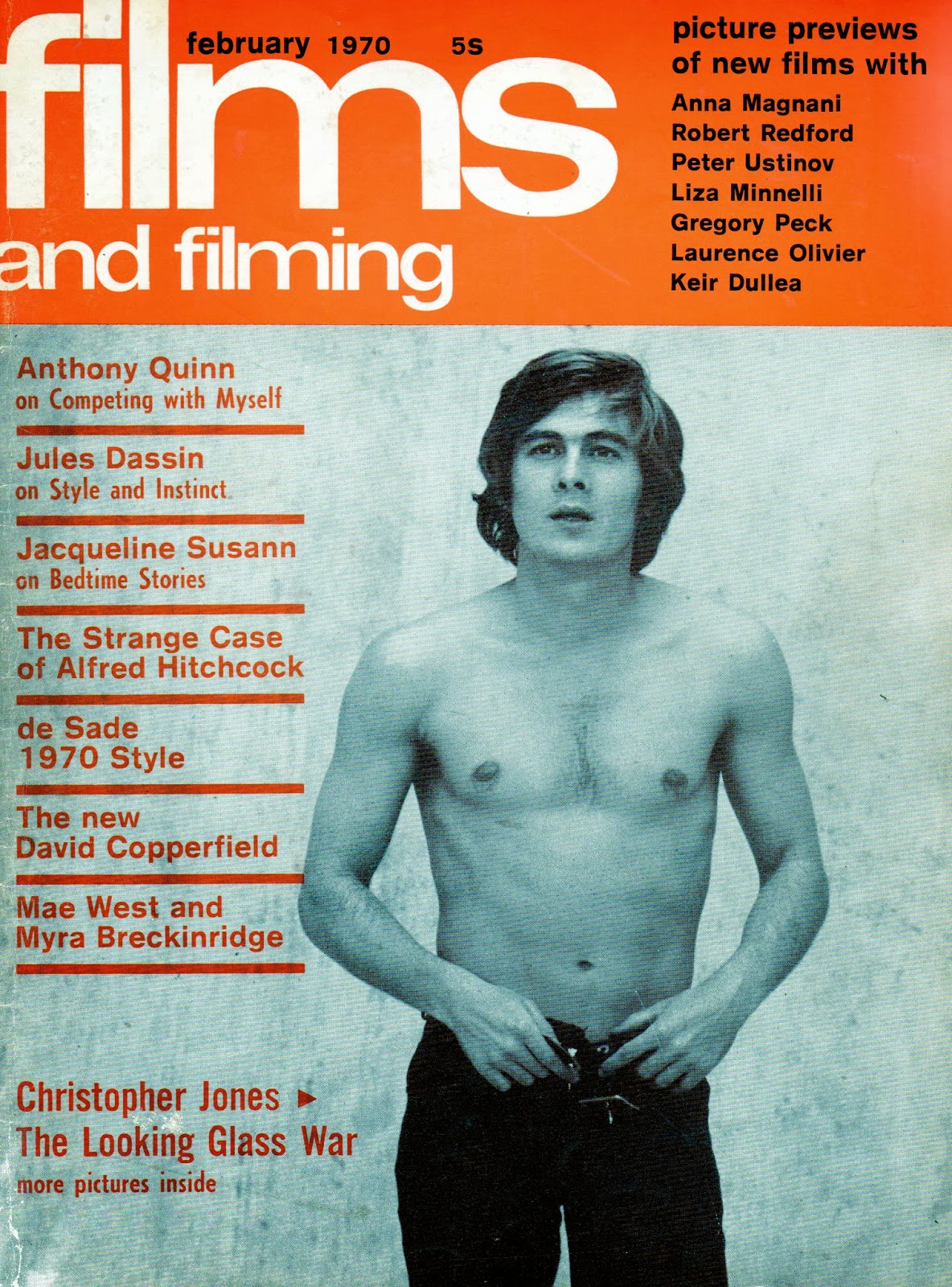
Christopher Jones (1941-2014) aged 72, had an odd career, but was the new hot American dude of the late '60s, the Zac Efron of his era? with those AIP classics WILD IN THE STREETS and THREE IN THE ATTIC (Jones label) which caught the hippie era perfectly. David Lean's overblown RYAN'S DAUGHTER did not do much for him, nor the John Le Carre THE LOOKING GLASS WAR. It seems he was badly affected by the Manson murders as he had known Sharone Tate ... the reclusive would-be James Dean left the movies after that. 

  • Miklos Jansco (1921-2014), aged 92, prolific Hungarian director who had that international hit with THE ROUND-UP in 1966, with those complex camera movements; as well as titles like AGNUS DEI, THE RED AND THE WHITE, SILENCE AND CRY. I saw his 1970 THE PACIFIST with Monica Vitti, at a London Film Festival then. 

Philip Seymour Hoffman (1967-2014), aged 46. We were shocked by this latest news, another of the leading actors of his generation gone too soon. Stage and screen actor Hoffman would surely have gone on to yet more successes, like his best actor win for CAPOTE. Ever since BOOGIE NIGHTS in 1997 and MAGNOLIA, THE TALENTER MR RIPLEY where he was a splendid Freddie, as well as roles in COLD MOUNTAIN, PUNCH DRUNK LOVE, THE BIG LEBOWSKI and BEFORE THE DEVIL KNOWS YOU'RE DEAD (waiting in my pendping pile). DOUBT, and THE MASTER. Several of his last roles are still to be released. I will be looking at his CAPOTE again soon, I really wanted Heath Ledger (for BBM)  to win that year, how odd they are both gone now, and from overdoses ...

Sunday, 2 February 2014

Sunday papers: art, music, fashion ...


Today's The Sunday Times has come up trumps with a new interview with David Hockney by Brian Appleyard (who also took the photographs), who has interviewed Hockney several times before, on the painter now re-located back in Los Angeles, but looking frail and a lot older at 76. He is still quite deaf and defiantly still smoking, despite his doctors telling him not to. David, like Joni Mitchell, remains one of the great smokers of our time !  As the introductory blurb put it:
 "In a tough couple of years, David Hockney has had a stroke, lost an assistant, decamped from his 'mean-spirited' homeland and put the iPad aside - to produce a brilliant series of painted portraits'.

Its quite a contrast to see the suddenly older Hockney beside his L.A. swimming pool now compared to those other pool shots from the 70s and 80s, as per other Hockney posts here, as of course time relentlessly goes on. We hope David at 76 is able to continue to surprise and delight us, particularly after the tragic death of his assistant Dominic Elliott last year. 
I am thinking too of that time in 1966 when new to Bayswater and not far from Notting Hill, the 20 year old me saw him in a Notting Hill gay bar, somewhere in Pembridge Road. Being my first nervous visit to such an establishment, I did not linger ... but the blond hair and the round black frame glasses were unmistakable. We have liked his various forays over the decades including those recent large paintings from the North of England.

The Daily/Sunday Telegraph on the other hand came up with  '500 Must Have Music Tracks', a nice companion to their '500 must see films' and '500 must-read books'.   This new list (how we love lists!) covers all genres, from love songs, dance songs, folk, singer-songwriters, rock, country, songs from films, opera arias, soul, world music, party songs, tracks to exercise to, covers, live recordings, jazz, songs to drive to, classical songs, timeless anthems, pop songs ("Dancing Queen" to "She Loves You"), guilty pleasures, songs from musicals, blues and hip hop. Phew .... nice illustrations and precise paragraphs on most of them, like this on Deee-Lite's "Groove is in the Heart":"If one song captures the dizzy cartoon utopianism and inclusivity of 1990s dance culture, it's this, the Austin Powers of club tracks: kitsch disco-pop fluff so fun of fun and funk that it's impossible to dislike". / Or on Etta James' "I'd Rather Go Blind": "Equal parts blues and soul, this was partly written by music innovator Ellington Jordan while serving a prison sentence for robbery, then finished by his friend Etta James. It is as aching and painful a slice of heartache as has been committed to vinyl". Nice to see all my favourites (like Nina Simone) included, from Joni Mitchell's "River" to Joan Armatrading's "Love and Affection". 

On the fashion front, some new chinos I ordered have arrived, at a good sale price too. I love the raspberry colour ones, and its great to have a pair in airforce blue too, as I had a suit in that colour back in the 70s. These will be great for the beach in Ireland, before too long ... I may invest in a good pair of brogue shoes too ... 

A good Sunday then, now for a gin & tonic later on while we catch up with some tv - and the devastating news about Philip Seymour Hoffman. ...

Saturday, 1 February 2014

Greek tragedy, Turkish delight - a Melina double-bill.

I came across Rex Reed's 1967 article on Melina Mercouri, when sorting out books in the garage, and just have to share this opening paragraph: "Years from now, when we're all dead and gone, they'll still be talking about Melina Mercouri. They'll talk, because in an age full of plastic people, she was the real thing." Melina was on Broadway at the time, in a musical ILLYA DARLING, based on her hit film NEVER ON SUNDAY.
 
PHAEDRA, 1962 is a retelling of the Greek myth of Phaedra. In modern Greece, Alexis's father, an extremely wealthy shipping magnate, marries the younger, fiery Phaedra. When Alexis meets his stepmother, sparks fly and the two begin an affair. What will the Fates bring this family? Alexis's roadster and the music of Bach figure in the conclusion. 

NEVER ON SUNDAY was that great surprise hit of 1960, as European cinema was getting more popular and outside of the arthouses, that song and the music of Mikis Theodorakis swept the world. (I still have the soundtrack EP with Melina singing the theme song). Jules Dassin and Melina Mercouri were hot, after their previous films like STELLA and LA LOI in 1959. They next turned to Greek tragedy and Euripides:  PHAEDRA, instead of Elektra, Antigone or Medea. Its a brilliantly shot drama with great black and white images as the relentless Phaedra sacrifics all for the love of her stepson Alexis. 
It starts with shipping magnate Thanos (Raf Vallone) celebrating the launch of his latest vessel, the "Phaedra", then he unwisely sends his wife Phaedra to London to bring back his son - Perkins. They meet at the British Museum, by the Elgin Marbles (which Mercouri when a later MP campaigned tirelessly to have returned to Greece); she thows an expensive ring into the Thames as the price to pay and soon they are having a passionate affair in Paris. 
Back in Greece Thanos has plans to link his son with the daughter of a friendly rival thus making the the most powerful family in Greece, but Phaedra is burning up with passion which will not be thwarted, to the alarm of her faithful servant .... The sybolism is laid on as the Aston Martin car which Alexis loves and has been bribed with arrives in Greece in a big box - the natives bless themselves and say it looks like a coffin. The young people go dancing, and Alexis begs Phaedra to leave him alone.  Then disaster strikes - the "Phaedra" has sunk with loss of life of crew. Phaedra chooses this moment to arrive at Thanos's office as they are announcing the names of the dead, to tell her husband that she loves Alexis and there will be no marriage .... The Greek tragedy ending is clear - Thanos beats up his son who drives off in that car, which soon plunges over a cliff, as Phaedra, assisted by her servant, prepares to take her own life. The images are stunning - Phaedra all in white with a white turban and dark glasses, pushing her way through the wailing relatives of the dead, all in black. She has a great Dior wardrobe too.

Mercouri is a fascinating presence, like Moreau (they were both in THE VICTORS, 1963) or Signoret, able to look radiant or haggard at will. Pauline Kael has referred to her "drag queen baritone" and she does seem to have an unusual voice to suit a larger than life persona. She and Dassin continued making films, like PROMISE AT DAWN and A DREAM OF PASSION which were certainly interesting. She died in 1994 aged 73 after her later years in the Greek Parliament.  I remember an afternoon with her in 1968, that revolutionary year, when I was 22 and attending a march in Trafalgar Square about aid for Biafra in Africa. Melina was leading the march and looked splendid in a long red dress with lots of gold chains. 10.30 PM SUMMER in 1966 is rather a lulu, but quite enjoyable, a version of Duras with the intriguing threesome of Peter Finch, Melina and Romy Schneider, and considered quite daring at the time. (Review at Melina, Romy, Peter labels). During the '60s she was one of the great European ladies, along with Anouk Aimee, Monica Vitti, Romy Schneider, Liv Ullmann, Stephane Audran, Ingrid Thulin, Loren, Lollobrigida, Cardinale etc. Irene Papas of course was other great Greek actress, pity they were never cast together ...

Perkins too after PSYCHO had some good years in Europe, mainly for Welles' THE TRIAL (with Moreau, Schneider, Martinelli), GOODBYE AGAIN (Perkins label) in Paris in '61 from Francoise Sagan, with Ingrid Bergman and Yves Montand was popular, and teamed with Loren again in the thriller FIVE MILES TO MIDNIGHT in '62, and with Bardot in THE RAVISHING IDIOT in 1964. PHAEDRA in Greece in '62 seems to have been unseen for a long time, but its certainly fascinating now; Kael also commented that the film's flaw is how could anyone believe Phaedra would leave Raf Vallone for boyish Tony Perkins ...

TOPKAPI is a bright, dazzling, colourful comedy thriller, from Eric Ambler, which was a big hit in 1964, and won Peter Ustinov a best supporting actor award. Its set in Istanbul and is about a daring jewel robbery. Dassin recreates his great RIFIFI robbery again, as the gang prepare to steal a priceless dagger from the Topkapi Museum - will they get away with it? 
Fun and thrills abond in equal measure, as Melina and Maximilan Schell recruit down on his luck Ustinov, as well as that other great scene-stealer Robert Morley. Melina's friend Despo from NEVER ON SUNDAY, is amusing here too as the lady-friend of Ustinov in the early scenes, Its a light-hearted caper taking in the sights of Istanbul, including those oiled wrestlers. I remember sitting through it twice when it opened in 1964, when I was 18.