Dedications: My four late friends Rory, Stan, Bryan, Jeff - shine on you crazy diamonds, they would have blogged too. Then theres Garry from Brisbane, Franco in Milan, Mike now in S.F. / my '60s-'80s gang: Ned & Joseph in Ireland; in England: Frank, Des, Guy, Clive, Joe & Joe, Ian, Ivan, Nick, David, Les, Stewart, the 3 Michaels / Catriona, Sally, Monica, Jean, Ella, Anne, Candie / and now: Daryl in N.Y., Jerry, John, Colin, Martin and Donal.
Showing posts with label Terence Rattigan. Show all posts

Wednesday, 5 November 2014

RIP, Renee Asherson

Renee Asherson (1915-2014), the actress, who has died at the grand age of  99, was - according to "The Daily Telegraph" "a delicately feminine exponent of the classics, both ancient and modern; yet she never reached the dramatic heights implied by several early triumphs. With her twinkling eyes, husky voice and petite figure, RenĂ©e Asherson brought distinction and charm, if not much steel, to scores of plays and many films and television dramas."

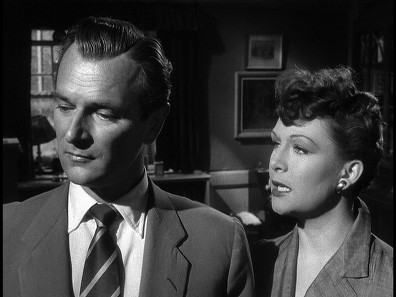
Leigh & Asherson in STREETCAR
She worked in the theatre during the '30s and '40s (starting in Gielgud's legendary ROMEO AND JULIET in 1935 where he and Olivier alternated the roles of Romeo and Mercutio. She is marvellous in Asquith's THE WAY TO THE STARS (Rattigan label) in 1945 where she and Rosamund John are perfect English gentlewomen (a la Celia Johnson).. She played the French princess in Olivier's HENRY V, and he also directed her as Stella in that first British production of A STREETCAR NAMED DESIRE in 1949 (right) where Vivien Leigh was Blanche to Bonar Colleano's Stanley. 
A long career in theatre and television followed, plus roles in POOL OF LONDON, THE MAGIC BOX (with her husband Robert Donat), and Vincent Price's THEATRE OF BLOOD in 1972. Television work included the obligatory MISS MARPLE series, MIDSOMER MURDERS, COUNTRY MATTERS, TENKO and that all-star BBC MEMENTO MORI with Maggie Smith in 1992. Her final film role was in THE OTHERS in 2001. 

Saturday, 13 September 2014

Separate Tables, 1958

Terence Rattigan's 1954 play SEPARATE TABLES is a Fifties time capsule now, capturing as it does that genteel Bournemouth hotel with its residents at their separate tables ... the play is in two acts, with the main two leads playing different characters in each act, the other residents stay the same. In the original production it was Eric Porter and Margaret Leighton. But the Hecht-Hill-Lancaster production team when they made the popular 1958 film in Hollywood, combined them both into one continuous narrative, thus 4 stars were required for the main 4 characters, who are now Burt and Rita Hayworth, and David Niven and Deborah Kerr. This required a lot of dexterous pruning of the original script, which Rattigan himself did with John Gay and an uncredited John Michael Hayes. 
In the theatre when played as two acts, the acts are 18 months apart time-wise, but in the film we are in the continuous timeframe of the first act. This means a lot of the young couple (Rod Taylor and Audrey Dalton, below right) has been removed, and new material inserted, like scenes between Sybil and Mrs Shankland (Kerr and Hayworth) (who do not meet in the two separate act orginal).
The young couple stay as we see them in the first act - but in the second act of the play (18 months later) they are now married with a baby, which takes up all the mother's time - she sides with dragon-lady Mrs Railton-Bell to get the bogus Major, who has been exposed as a fake and a pesterer of women at the cinema, expelled from the hotel. Her husband does not agree and sides with the other residents. It makes for more interesting drama, but all that has to go for the film. 

There is a lot more of Miss Cooper, the hotel manageress, too in the play, but Wendy Hiller managed to scoop Best Supporting Actress for her role in the film. Niven of course won the Best Actor, but it seems a blustering fake performance, but then he is playing a blustering fake. Kerr is marvellous as the downtrodden Sybil, who finally stands up to her bully of a mother - Gladys Cooper being very malevolent here, as she was to Bette Davis in NOW VOYAGER. Hayworth and Lancaster add the Hollywood gloss and are perfectly adequate. The film is one of 1958's big enduring ones, up there with I WANT TO LIVE!, THE DEFIANT ONESTHE BIG COUNTRY, THE VIKINGS, SOUTH PACIFIC, AUNTIE MAME etc. 

I have seen a few other productions - John Schlesinger directed that 1983 television film, long unavailable, which goes back to the two act structure, with Julie Christie and Alan Bates (ther fourth teaming) playing both sets of leads, with Claire Bloom perfect as Miss Cooper, and Irene Worth, a monstrous suburban bully, as Mrs Railton Bell. Liz Smith shines too as the racing-mad spinster and Brian Deacon (from THE TRIPLE ECHO) as the young husband. - as per my fuller review, at Rattigan/Bates/Christie labels, which also goes into another version of Rattigan's work ...

I have now seen a BBC 'Play of the Month'  production of the play from 1970 with Porter and Geraldine McEwan in the lead roles. It is perfectly satisfying but a bit low-key. It is part of the BBC Terence Rattigan boxset (a nice companion to the Noel Coward boxset, again with interesting productions which I must return to), which also includes part of another version I saw on stage in the 70s, with John Mills and Jill Bennett. (As we mentioned previously, Rattigan's original text had the major pestering men in the cinema, but that would never have played back in the Fifties... and certainly not in the film, which suggests there is a future for the Major and Sybil).  

I also saw Rattigan himself at the BFI giving an entertaining talk also in the early 70s. The 1958 film though, directed by Delbert Mann, is the version most people know and like, even though it does not do full justice to the play and Rattigan's plea for tolerance for those who are 'different'. 

Saturday, 5 October 2013

Lost and found: The Deep Blue Sea, 1955

Hardly a "forgotten film", more like an unavailable one the 1955 THE DEEP BLUE SEA has not been properly available for decades, I was given a so-so copy a year or two ago but had not really bothered with it. Now though it is back, and being shown by the BFI in their November tribute to Vivien Leigh. It seems they have made a digital copy of a surviving 35mm print with variable quality, which they will be screening twice, so a new dvd may follow in due course. 
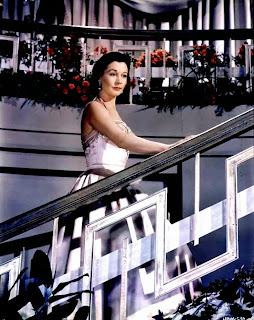
Stealing a march on the BFI, time to dig out my copy then - and the print is reasonably ok, not fuzzy but maybe a bit bleached out. It is of course one of Terence Rattigan's most famous plays and a key Vivien Leigh film. Leigh only made 8 films after GONE WITH THE WIND (WATERLOO BRIDGE, THAT HAMILTON WOMAN, CAESAR & CLEOPATRA, ANNA KARENINA in 1947, A STREETCAR NAMED DESIRE, THE DEEP BLUE SEA in 1955, THE ROMAN SPRING OF MRS STONE in 1960 and SHIP OF FOOLS in 1965 - see Leigh label for reviews on these later ones. She also began that routine programmer ELEPHANT WALK in 1953 (an odd choice for her but it seems she wanted to work with Peter Finch, whom she was involved with) - but her illness forced her to leave the production, though it seems she is still seen in long shots, as she was replaced by Elizabeth Taylor.  So, finally to THE DEEP BLUE SEA:

I looked at my serviceable copy of it yesterday and its a fascinating mid-50s movie, it must have been novel at the time for the audience to see Lady Olivier putting a shilling in the gas meter to gas herself ... but her Hester seems to be on a similar arc as her Mrs Stone and Mrs Treadwell (SHIP OF FOOLS) - a glacial (some may say icy) beauty with deep needs which are not being fulfilled - by either her baffled lover Freddy (who flees to Canada to test planes) or her staid husband. Poor old Kenny More comes on as though he is still playing the silly ass from GENEVIEVE. The play has been opened up with flashbacks to how they met, at an aerodrome, the golf course, a society ball, and ski-ing as Klosters. They are referred to at the apartments as Mr and Mrs Page, but surely they are not married? Maybe they could not be seen living in sin then ...

Hester has attempted suicide in Freddy's absence but is rescued in time. Freddy is furious when he finds out (and gives her another shilling for the meter in case he is late for dinner!). Her husband (Emlyn Williams), a judge, is still in love with her, but seems not to provide the passion she seeks. The doctor (Eric Portman) who saved her life proffers some advice, but can Hester take control of her own destiny and live for herself? She could return to the judge and continue that high class existance .... 


It is a nice view of mid-'50s London, at that apartment house on the riverbank, and there are some familiar faces: Dandy Nichols, Moira Lister, Miriam Karlin, even Sid James as "man in street".  Ultimately it is Leigh's film, and as one of her classic roles it should be made available again. Terence Davies of course re-made it in 2011, rewriting the Rattigan original considerably to suit his own milieu, to the annoyance of the Rattigan purists. The 1955 film is pure Rattigan of course, like his play SEPARATE TABLES (Rattigan label). I saw him once giving a lecture at the National Film Theatre, sometime in the early '70s, a very dapper man; his house on Brighton seafront (which I used to live near) has a blue plaque in his honour.  

Leigh died in 1967, but was always a great beauty and a true star - I don't care for GWTW that much, but her Blanche DuBois in STREETCAR remains one of the great female performances in cinema, I particularly like THE ROMAN SPRING OF MRS STONE. Alexander Walker's biography captures her best, particularly that great era when she and Laurence Olivier were the reigning couple in British theatre. Above: SHIP OF FOOLS.

Monday, 20 May 2013

Separate tables for return of the soldier

SEPARATE TABLES. The only version available of the 1983 tv production of Rattigan's SEPARATE TABLES was a video-cassette edition on Amazon, so I had to have it - this meant finally connecting up my old vhs-dvd recorder (not used since 2006) to the new flat wide HD tv & Blu-ray combo, but it works, so I can now play cassette tapes again. Like many others I ditched most of them when I went over to dvd (charity shops don't want them now...) but kept some rarities I shall be gettting back to (like Lee Remick hosting a Marilyn Monroe tribute, Bette Davis's AFI Lifetime Achievement award, Joni Mitchell's video collection "Come In From The Cold", a Pet Shop Boys concert, and others), but here finally is that SEPARATE TABLES, which was only shown once here.

Its a terrific cast and looks great in colour and seems to be the full version of the Rattigan play, set at that quaint retirement hotel in Bournemouth, with those lonely souls at their separate tables, including the horse-racing mad spinster, and the retired headteacher (obviously secretly gay) whose star pupil keeps not turning up). The well-loved 1958 film by Delbert Mann of course dovetailed the two separate acts into one narrative with 4 main leads (Niven and Kerr as the bogus major and repressed spinster; its producer Burt Lancaster and Rita Hayworth as the journalist and his ex-wife who turns up).
The actual play is two separate acts with one pair of leads playing all four main parts in the two stories, with the other characters turning up as usual. Here we have Alan Bates and Julie Christie - in their fourth outing together - and how ideal they are. Julie aims for that Margaret Leighton brittleness as Mrs Shankland (Leighton originated the part), and its hard to make her look dowdy as downtrodden Sybil, with that fearsome mother Mrs Railton Bell. Irene Worth here plays her as a suburban monster of a bully, in her tweeds and twinsets, a different take on Gladys Cooper's glittering malice in the '58 film. But the climax is just as satisfying as Sybil finally defies her mother ....

Interestingly, there is a lot more of Miss Cooper, the hotel manager, as satisfyingly played by Claire Bloom - Wendy Hiller's role was much smaller in the film (though it won her Best Supporting Actress Oscar). Claire excels here, but we expect nothing less from her. Liz Smith is ideal too as Miss Meacham, and Brian Deacon (from THE TRIPLE ECHO) is the young husband, there is more of him too defying Mrs Railton Bell, which I do not remember from the film (as played by Rod Taylor).  Schlesinger is the ideal director for this, and Rattigan's play is a nice plea for tolerance for those who are "different" - it is now understood that his original text had the major pestering men in the cinema, not women - which would seem more logial, but of course that was a no-no back in the '50s. I saw Rattigan doing an interesting Q&A lecture at the BFI, back in the early '70s, a very dapper man - and I passed his house on the seafront at Brighton in Sussex, only last week, when on a return visit there .... it has a blue plaque on it commemorating his living there.So pleased to get a definitive record of this great play, which does not get revived too much these days.
 

 The 1958 film ...


RETURN OF THE SOLDIER. Bates and Christie's third outing, this 1982 drama  is a surprisingly enjoyable very satisfying film too from that great era of the 70s and 80s when costume dramas with great casts were a regular on film and tv - maybe thats why this one passed me by at the time (perhaps I said "oh another Alan Bates, Julie Christie, Glenda Jackson film...") at the time of THE FORSYTH SAGA, WOMEN IN LOVE, THE VIRGIN & THE GYPSY, THE GO-BETWEEN, tv's COUNTRY MATTERS series etc - this is from a novel by Rebecca West and scripted by Hugh Whitemore, ideally directed by Alan Bridges (who also did the similar period THE HIRELING - see review below, Sarah Miles, Costume Dramas labels) and the very highly regarded THE SHOOTING PARTY, with Mason and Gielgud, which I will be returning to. 

Bates is the shell-shocked army man who loses about 20 years of his memory and has no recollection of being married to Christie, a petulant spoiled beauty here and lady of the manor. Glenda Jackson turns up with news of the injured Major and she turns out to be his great love from his past and he wants to get back with her. She though is lower class and now married to Frank Finlay and I loved their ideal little house. Ann-Margret is surprisingly effective and fits in nicely as the cousin who also resides at the big house, and the cast includes Jeremy Kemp and Ian Holm. 
The First World War milieu is perfectly realised. I liked it a lot, Christie shines in a different role for her as the demanding, haughty bitch; Glenda is perfect as usual as the simple housewife and underplays nicely here. Like Ken Russell's THE RAINBOW or Miles' THE PRIEST OF LOVE (reviews at costume drama label), it is a nice discovery now, and keeps one guessing until the end. The great house looks familiar too, perhaps I visited it once, or was that Polesden Lacey another similar grand National Trust property.

Thursday, 2 June 2011

Perfectly theatrical (Life During Wartime continued)

We have closed the Projector for a day or two and headed off to the theatre: the current London revival of Terence Rattigan's FLARE PATH proved a worthwhile experience, a loving crafted revival of Rattigan's 1942 play, which was later used as the basis for his script for Asquith's THE WAY TO THE STARS (see below) in 1945. A strand of this also turned up in Rattigan's script for THE VIPS - the lead Peter Kyle [James Purefoy] is an actor who has turned 40 and feels his career is starting to slip so he really needs the woman he loves [Sienna Miller] to leave her husband for him - but she eventually realises how much the husband, a wartime pilot, needs her so she decides to stay with him... FLARE PATH is set at that hotel (lovingly realised on stage) by the airfield as airmen and residents wait for those who are flying to return. The best character here is the Countess, a former barmaid, who does not really understand how much her Polish husband loves her until the visiting actor Kyle reads her his letter (which is in French) to be given to her in case he goes missing ....

This is a magnificent revival of a great play by Trevor Nunn which is both profoundly moving and wonderfully funny, thanks mainly to Sheridan Smith as Doris the former barmaid, now the Countess Skriczevinsky, just as good here as she was in LEGALLY BLONDE, last year's stage hit. The visuals too and sounds of the bombers taking off are brilliantly realised.

Here is what I wrote last year on THE WAY TO THE STARS:

The perfect Sunday afternoon movie
THE WAY TO THE STARS, 1945. I love English movies of the '40s, and this is a prime example. Its up there with IN WHICH WE SERVE or THIS HAPPY BREED showing the fortitude of life in wartime with stiff upper lips covering depths of emotion. This one is by Terence Rattigan and directed by Asquith, and captures the war era perfectly, set as it is on an airfield and the adjoining hotel run by Toddy - Rosamund John as the quintessential English gentlewoman (rather like Celia Johnson). Toddy marries airman Michael Redgrave and they have a baby - but he is a casualty of war and Toddy bravely carries on, observed by friend John Mills - but he does not wish the same fate on Renee Asherson so their romance flounders until Toddy puts him right. Then there are the americans, including Bonar Colleano and Douglass Montgomery who becomes friendly with Toddy. This movie must surely have influenced Schlesinger's YANKS, whose Richard Gere even resembles Montgomery! Add in Joyce Carey as the snobbish hotel resident who gets her just comeuppence, and a young Jean Simmons (16) who sings that song "let him go let him tarry". It all adds up to stirring deeply emotional stuff, ending as Toddy closes the hotel for the night, looking up at those stars. THIS HAPPY BREED, 2000 WOMEN, THE GENTLE SEX, I LIVE IN GROSVENOR SQUARE and Lean's BRIEF ENCOUNTER and THE PASSIONATE FRIENDS are more of the same....

Friday, 4 March 2011

A Rattigan double bill

A terrific early '50s double bill of Terence Rattigan adaptations - I thought I would steal a march on the London NFT (National Film Theatre) with their mini-Rattigan season in April, it being Rattigan's centenary year (as it is also Tennessee Williams]. Several Rattigan productions are already on their way to being staged here - a new version of FLARE PATH opens shortly by Trevor Nunn (this was the basis for the great 1945 THE WAY TO THE STARS) [my review of this favourite is at War label], and there is also a new production of CAUSE CELEBRE and Terence Davies has made a new version of THE DEEP BLUE SEA (the 1955 Vivien Leigh film being curiously unavailable for years [though I did source a copy last year]. So it seems Rattigan is back being in favour again. I saw him give a lecture back at the NFT in the early '70s when he was as spry and dapper as ever. His great successes of the '50s and those scripts he turned out in the '60s for films like THE VIPS, THE YELLOW ROLLS ROYCE and that remake of GOODBYE MR CHIPS had all been quite successful, though his type of well made plays had temporarily gone out of fashion with the arrival of the 'kitchen sink' dramatists.

I had not seen THE SOUND BARRIER before and it is a revelation. Totally engrossing and marvellously filmed by David Lean, as meticulous as ever, with great depths of controlled feeling and emotion, depicting the breaking of the sound barrier. This may have been done by pilot Chuck Yeager back in 1947 (as shown in THE RIGHT STUFF), but this drama excels as driven industrialist Ralph Richardson and his equally driven test pilots Nigel Patrick and then John Justin take the controls of those aircraft. We get great aerial photography, no obvious process shots, and those aircraft like the Comet are lovingly filmed. Ann Todd (Mrs Lean at the time) excels here, as she does in Lean's 1948 THE PASSIONATE FRIENDS (another great discovery recently) as Richardson's daughter who has already seen her brother (Denholm Elliot) die in a plane crash trying to please his father, and now her husband is also going to try to smash the sound barrier. That excellent actor John Justin is the other pilot - with that ideal home life with Dinah Sheridan to whom Todd flees when she can no longer stay with her tyrant (or is he?) father. The drama is nicely resolved and there is a nice detour with a trip to Egypt - quite a novelty then I imagine. It is just a perfect early 50s British film, with those actors like Richardson, Patrick and Todd at the top of their game, as of course was Lean and Rattigan.


THE BROWNING VERSION is Anthony Asquith's sterling 1951 film of Rattigan's play, again superbly cast with Michael Redgrave in perhaps his best film role (along with Losey's TIME WITHOUT PITY in 1957) as the schoolmaster Crocker-Brown, with Jean Kent as his unfaithful wife and Nigel Patrick again (as insouciant as ever) as her lover.
Once a brilliant teacher, Redgrave has turned into a desiccated, unfeeling pedant, despised by his colleagues and feared by his pupils, apart from young Taplow. Ill-health has prompted his early retirement, but it is apparent that his departure will go unmourned, in contrast to that of his attractive wife (Jean Kent). Dismissed as outdated and irrelevant after the Angry Young Men of the mid '50s rendered his middle-class scenarios unfashionable, Rattigan was a master technician of drama, and his dialogue and pacing are faultless. I like that long terrific scene with Redgrave and Patrick where the latter regrets his affair with the spiteful wife and tries to make amends, but Redgrave knows well how unsatisfied his wife is and how it is his fault. There is so much restraint and control here it is quite affecting. There was a 1994 remake but like those lightweight recent remakes of Wilde's THE IMPORTANCE OF BEING EARNEST and AN IDEAL HUSBAND they are just not in the same league as the 1952 and 1947 originals.