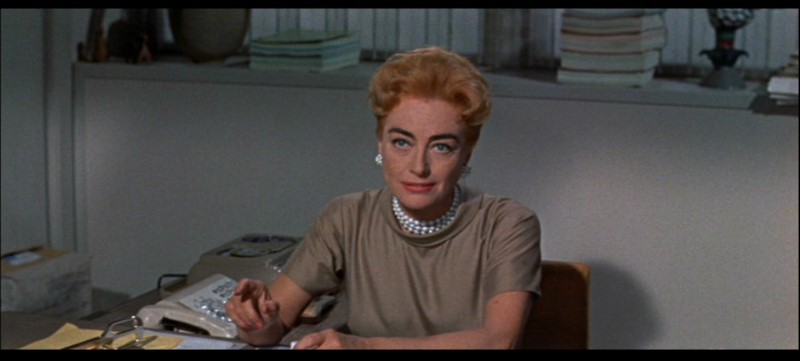
One of the pleasures of watching old movies is catching up with a Mary Astor performance one had missed – as recently with A STRANGER IN MY ARMS and RETURN TO PEYTON PLACE, or re-visiting a favourite like THE MALTESE FALCON or THE GREAT LIE.
Mary (1906-1987) began in the silents, doing two films with John Barrymore (with whom she had an affair) and then she successfully graduated to talkies with roles opposite Gable in RED DUST in ’32 (Grace Kelly played it in the ’53 remake) where she is tremendous as the wife falling for the hunter, other roles included DODSWORTH. In 1941 she won the best supporting actress award for THE GREAT LIE, and also starred in Huston’s MALTESE FALCON as the duplicitous Brigid O'Shaughnessy . Other hits included MIDNIGHT and THE PALM BEACH STORY. Soon though she was relegated to playing those saintly mothers in MEET ME IN ST LOUIS in ’44 and in the ’49 version of LITTLE WOMEN. I have already written about how wonderful the 1947 DESERT FURY is, that delirious noir in blazing colour, as per Mary Astor label, where she is Fritzi the casino owner and the mother of Lizabeth Scott.


The ‘50s saw a tougher series of mothers – Robert Wagner’s in A KISS BEFORE DYING, and Sandra Dee’s in A STRANGER IN MY ARMS where she is the queen bee determined everyone shall obey her. Then there was the chilling Robert Carter in RETURN TO PEYTON PLACE in 1961. 1964 provided a return match with Bette in the small but pivotal role of Jewel Mayhew in HUSH HUSH SWEET CHARLOTTE, her final role. Mary had a racy private life and kept a diary which featured in a sensational court case. Her two books “My Story” and “A Life in Film” were best-sellers in which she discussed her various marriages, lovers and screen work.
 THE GREAT LIE - A superior ‘40s soap, as directed by Edmund Goulding. Bette’s Maggie and Mary’s Sandra Kovac are in love with the same man George Brent. Sandra is a talented but temperamental concert pianist. The convoluted plot sees Brent and Astor getting married but it is invalid as her previous divorce is not final, they separate and he marries Davis, and then goes missing when his plane goes down on a secret mission. Meanwhile, Sandra discovers she is pregnant but cannot let a baby get in the way of her career, so rich girl Bette convinces her to have the baby which she will then have so the infant can inherit Brent’s wealth. Some delicious scenes then follow with the women holed up out in the desert awaiting the birth, as Bette strides around in her jodhpurs and Sandra demands steaks and cigarettes …. THEN, Brent is found and comes back and thinks the baby is his and Bette's. Sandra soon decides she wants Brent back and the baby too and is determined to tell him the truth, so Bette invites her to stay … as the truth comes out. To add to the delirium there is also Hattie McDaniel looking after them down on the plantation. It remains a favourite Bette Davis film and Astor’s Sandra is a tremendous performance full of variety. Bette plays "nice" here while Astor is the bitch. Terrific stuff.


 A STRANGER IN MY ARMS – a rather unknown Ross Hunter production from 1959, this widescreen black and white melodrama teams June Allyson and Jeff Chandler, with Hunter regular Sandra Dee (my crush at the time, in my early teens) but the real star here is Mary Astor firing on all cylinders as the queen bee who dominates them all. June is the widow of a supposed war hero living with his dominating mother (Astor) who is seeking the highest military award for her late son whom she ruthlessly dominated and kept close to her. Chandler is the air force pilot who knows how her son really died as the family (Charles Coburn is also involved) try to bend him to their will so he will falsify the truth – we get flashbacks to him and the son (Peter Graves) surviving at sea on their raft. Allyson had only been married to the son for all of 6 weeks bu
 t now Astor (who really hates her) steamrolls her every attempt at independence. Naturally June and Jeff are attracted, Astor will not stand for it, as daughter Sandra tries to help the lovers who finally manage to stand up to Mary in a rather good climax. Directed by one Helmut Kautner (a German, but no Sirk), its all rather turgid but fun, Allyson’s last of the ‘50s and she is her usual self here with those buttoned-up blouses, peter pan collars, gloves and little hats. This though is Mary Astor’s show all the way.
 RETURN TO PEYTON PLACE – Jose Ferrer’s 1961 film for 20th Century Fox (his wife Rosemary Clooney sings the theme song over the nice credits depicting New England in all its seasonal glory) would seem a follow-up to the sensational PEYTON PLACE of 1957 – but the original seems to be set back in the 40s and this is a very early 60s looking movie. New cast all round too: Carol Lynley is Allyson who writes the sensational book, Tuesday Weld is now Selina Cross and Eleanor Parker steps in to Lana Turner’s shoes as Constance. We spend a lot of time though in New York as Alison meets her publisher (Jeff Chandler, again) and is groomed for literary stardom. Back in Peyton Place the real star of the show is Mary Astor (again) as Roberta Carter, whose son Brett Halsey is returning home – but he turns up with his new wife Rafaella (Luciana Paluzzi) but he is too spineless to stand up to his domineering mother so the stage is set for melodramatics. Then the book is published and Roberta is outraged and tries to get it removed from the library, bringing in conflict with Con
 stance’s husband Mike Rossi, the school head. Meanwhile Selina gets involved with the new ski instructor … It is all movie-making by numbers but Fox did this kind of stuff well, and Astor again has the plum role. There must have been some changes though: in the trailer on the disk we see the bedroom of Halsey and Paluzzi going up in flames but this is not in the movie where we do not see Paluzzi after her ski accident, as the film climaxes at the town hall where Roberta is trying to get the book banned. All very odd – but a good trashy wallow nonetheless, with that nice early 60s cast.
Mary (1906-1987) began in the silents, doing two films with John Barrymore (with whom she had an affair) and then she successfully graduated to talkies with roles opposite Gable in RED DUST in ’32 (Grace Kelly played it in the ’53 remake) where she is tremendous as the wife falling for the hunter, other roles included DODSWORTH.
 In 1941 she won the best supporting actress award for THE GREAT LIE, and also starred in Huston’s MALTESE FALCON as the duplicitous Brigid O'Shaughnessy . Other hits included MIDNIGHT and THE PALM BEACH STORY. Soon though she was relegated to playing those saintly mothers in MEET ME IN ST LOUIS in ’44 and in the ’49 version of LITTLE WOMEN. I have already written about how wonderful the 1947 DESERT FURY is, that delirious noir in blazing colour, as per Mary Astor label, where she is Fritzi the casino owner and the mother of Lizabeth Scott.


The ‘50s saw a tougher series of mothers – Robert Wagner’s in A KISS BEFORE DYING, and Sandra Dee’s in A STRANGER IN MY ARMS where she is the queen bee determined everyone shall obey her. Then there was the chilling Robert Carter in RETURN TO PEYTON PLACE in 1961. 1964 provided a return match with Bette in the small but pivotal role of Jewel Mayhew in HUSH HUSH SWEET CHARLOTTE, her final role. Mary had a racy private life and kept a diary which featured in a sensational court case. Her two books “My Story” and “A Life in Film” were best-sellers in which she discussed her various marriages, lovers and screen work.
 THE GREAT LIE - A superior ‘40s soap, as directed by Edmund Goulding. Bette’s Maggie and Mary’s Sandra Kovac are in love with the same man George Brent. Sandra is a talented but temperamental concert pianist. The convoluted plot sees Brent and Astor getting married but it is invalid as her previous divorce is not final, they separate and he marries Davis, and then goes missing when his plane goes down on a secret mission. Meanwhile, Sandra discovers she is pregnant but cannot let a baby get in the way of her career, so rich girl Bette convinces her to have the baby which she will then have so the infant can inherit Brent’s wealth. Some delicious scenes then follow with the women holed up out in the desert awaiting the birth, as Bette strides around in her jodhpurs and Sandra demands steaks and cigarettes …. THEN, Brent is found and comes back and thinks the baby is his and Bette's. Sandra soon decides she wants Brent back and the baby too and is determined to tell him the truth, so Bette invites her to stay … as the truth comes out. To add to the delirium there is also Hattie McDaniel looking after them down on the plantation. It remains a favourite Bette Davis film and Astor’s Sandra is a tremendous performance full of variety. Bette plays "nice" here while Astor is the bitch. Terrific stuff.


 A STRANGER IN MY ARMS – a rather unknown Ross Hunter production from 1959, this widescreen black and white melodrama teams June Allyson and Jeff Chandler, with Hunter regular Sandra Dee (my crush at the time, in my early teens) but the real star here is Mary Astor firing on all cylinders as the queen bee who dominates them all. June is the widow of a supposed war hero living with his dominating mother (Astor) who is seeking the highest military award for her late son whom she ruthlessly dominated and kept close to her. Chandler is the air force pilot who knows how her son really died as the family (Charles Coburn is also involved) try to bend him to their will so he will falsify the truth – we get flashbacks to him and the son (Peter Graves) surviving at sea on their raft. Allyson had only been married to the son for all of 6 weeks bu
 t now Astor (who really hates her) steamrolls her every attempt at independence. Naturally June and Jeff are attracted, Astor will not stand for it, as daughter Sandra tries to help the lovers who finally manage to stand up to Mary in a rather good climax. Directed by one Helmut Kautner (a German, but no Sirk), its all rather turgid but fun, Allyson’s last of the ‘50s and she is her usual self here with those buttoned-up blouses, peter pan collars, gloves and little hats. This though is Mary Astor’s show all the way.
 RETURN TO PEYTON PLACE – Jose Ferrer’s 1961 film for 20th Century Fox (his wife Rosemary Clooney sings the theme song over the nice credits depicting New England in all its seasonal glory) would seem a follow-up to the sensational PEYTON PLACE of 1957 – but the original seems to be set back in the 40s and this is a very early 60s looking movie. New cast all round too: Carol Lynley is Allyson who writes the sensational book, Tuesday Weld is now Selina Cross and Eleanor Parker steps in to Lana Turner’s shoes as Constance. We spend a lot of time though in New York as Alison meets her publisher (Jeff Chandler, again) and is groomed for literary stardom. Back in Peyton Place the real star of the show is Mary Astor (again) as Roberta Carter, whose son Brett Halsey is returning home – but he turns up with his new wife Rafaella (Luciana Paluzzi) but he is too spineless to stand up to his domineering mother so the stage is set for melodramatics. Then the book is published and Roberta is outraged and tries to get it removed from the library, bringing in conflict with Con
 stance’s husband Mike Rossi, the school head. Meanwhile Selina gets involved with the new ski instructor … It is all movie-making by numbers but Fox did this kind of stuff well, and Astor again has the plum role. There must have been some changes though: in the trailer on the disk we see the bedroom of Halsey and Paluzzi going up in flames but this is not in the movie where we do not see Paluzzi after her ski accident, as the film climaxes at the town hall where Roberta is trying to get the book banned. All very odd – but a good trashy wallow nonetheless, with that nice early 60s cast.